Featured
Table of Contents
Whether you're engaging a PHP development business, working with remote designers, or consulting top-tier, this guide will help you deliver effective, scalable web and mobile applications in 2026. A web development structure is a pre-built structure or platform that offers designers with tools, libraries, and finest practices to construct web applications more effectively.
The best framework for web development in 2026 depends upon the task type. For the front end, React and remain top options. For the back end, frameworks like Laravel,, and Django are widely used due to their scalability and developer-friendly environments. When picking a structure for web advancement, consider elements like task scope, language familiarity, scalability needs, developer community, and long-lasting maintenance.
PHP frameworks like Laravel and Symfony will continue to be relevant in 2026 due to their robust environment, ease of integration, and widespread support from PHP development companies. They are perfect for jobs requiring and expense efficiency. Web application advancement expense varies based on intricacy, framework option, tech stack, and whether you work with a devoted software application development group or freelance remote developers.
Web application development cost differs based upon job scope, tech stack, intricacy, and the experience level of your devoted software application development group or remote developers. Custom-made enterprise applications cost substantially more than little websites. Working with devoted remote developers provides flexibility, access to worldwide talent, and lowered operational expenses. However, an in-house group offers closer partnership.
Protecting Your Local Supply Chain via Web StandardsDaljit Singh is a co-founder and director at Debut Infotech, having a substantial wealth of understanding in blockchain, finance, web, and mobile technologies. With the experience of steering over 100+ platforms for start-ups and international corporations, Daljit's visionary leadership has actually contributed in creating scalable and innovative options. His capability to craft enterprise-grade options has attracted various Fortune companies & & successful startups including- Econnex, Ifinca, Everledger, and among others.
Developing Responsive Applications Using Modern Tools
Invite to a peek into the future of web development! In our comprehensive guide, "Top Web Advancement Frameworks Set to Dominate in 2026," we start an amazing journey through the rapidly progressing landscape of digital innovations. As we stand on the verge of a brand-new year, the tech world is buzzing with anticipation for the structures that will redefine how we develop and experience the web.
Protecting Your Local Supply Chain via Web StandardsWe explore the features, capabilities, and developments that will form the digital realm, empowering developers and businesses alike to stay ahead of the curve. A web development framework is a structured collection of pre-written code, tools, and resources that developers use to construct and keep web applications, websites, or web services.
Frameworks typically enforce a particular structure for arranging code, which assists preserve consistency and readability throughout the task. Frameworks come with pre-built elements and modules that can be recycled across various parts of the application.
Numerous structures follow the Model-View-Controller (MVC) architectural pattern, separating the application into 3 main elements for much better organization and maintainability. Structures frequently include tools and energies for automating common jobs like testing, deployment, and database migrations, saving developers time and effort. Structures generally consist of security steps and best practices by default, helping to safeguard applications versus common web vulnerabilities.
Critical Criteria for Evaluating Enterprise CMS Tools
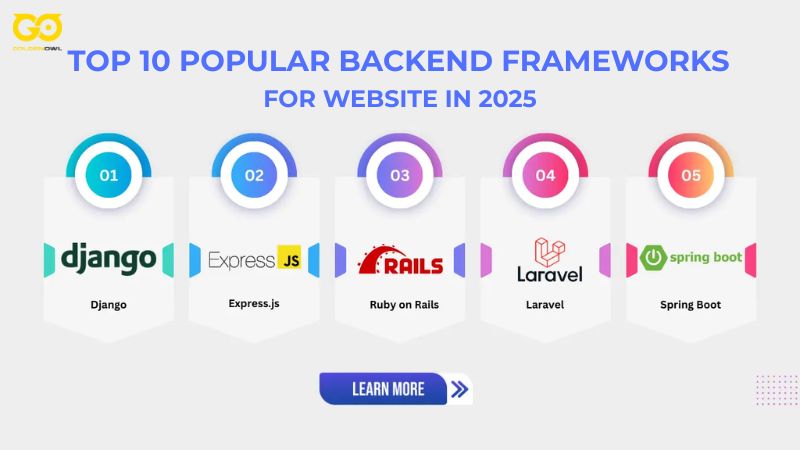
For example, is the foundation for Express, Ruby serves as the language for Ruby on Rails, and Python is the base for Django. In terms of use cases, and React master front-end development, while Django concentrates on back-end advancement. Some structures are customized to address specific problems like database connections and security administration.
Frontend Structures: Front-end frameworks simplify the advancement process by developing elements for interface. These frameworks offer pre-written, multiple-use code bits, styling tools, form recognition, and more. Some even aid in enhancing SEO and decreasing site loading times. Mostly making use of HTML, CSS, and JavaScript, popular front-end examples include AngularJS, React,, and others.
They play an essential function in user authentication, establishing safe connections, and handling database interactions. Numerous frameworks cater to different programming languages for server development, such as Express for and Django for Python. The abundance of choices permits you to pick both the programming language and structure that best suit your needs.
It is especially well-suited for constructing big, vibrant web applications. Angular follows the Model-View-Controller (MVC) architectural pattern and makes use of TypeScript, a superset of JavaScript, for building scalable and maintainable applications. With a robust set of tools and a modular architecture, Angular is known for supporting the advancement of complex and feature-rich interface.
A full-fledged, opinionated framework for building vibrant web applications. Utilizes TypeScript for building scalable and maintainable applications. Implements a two-way information binding system. Supplies a detailed set of tools for building complex user interfaces. Has a modular architecture that supports the advancement of large-scale applications. React, developed and preserved by Facebook, is a JavaScript library for constructing interface.
Evaluating Headless and Legacy CMS Solutions
React follows a unidirectional data circulation, making it easier to understand and debug applications. It is component-based, promoting reusability and maintainability. Respond has a huge and active community, contributing to its comprehensive environment of third-party libraries and tools. Key Includes Established and maintained by Facebook. A JavaScript library for constructing user interfaces.
Follows a unidirectional data circulation, making it easy to comprehend and debug. Supports component-based development, allowing reusability and maintainability. Large and active community with a vast environment of third-party libraries. is a progressive JavaScript framework for constructing user interfaces. It is developed to be incrementally adoptable, allowing designers to integrate it into existing tasks with ease.

Known for its simpleness and versatility, supports component-based development and supplies a clear and friendly design. Secret Features A progressive JavaScript structure for building user interfaces.

Latest Posts
Preparing Digital Platforms to Meet AEO Search Requirements
Mastering Modern Search Strategy for Maximum Growth
Dominating Natural Language SEO